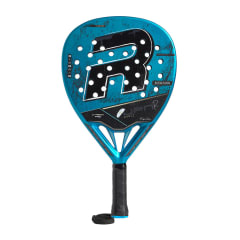
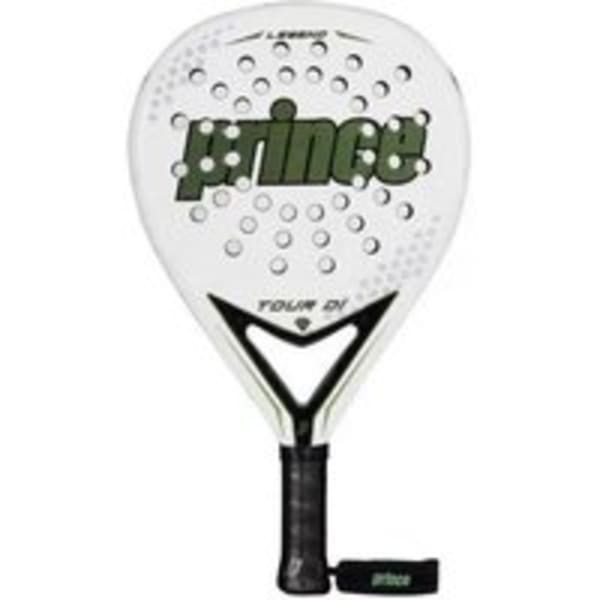
Prince Di Legend
✓Cross-checked with official data from Princehow we score
PADELTESTLAB SCORE
0-100 scale
80/100
Description
Who this racket is for
Pros
- ✓The diamond shape paired with a mid balance lets you smash with real mass behind the ball and still recover in time for the next bandeja, without the usual lag of a top-heavy diamond. The rough ESF Spin texture on both faces genuinely bites: viboras and sliced dropshots come off with spin even when you don't fully commit, and the serve picks up extra kick off the bounce. The hybrid carbon-and-fiberglass face over a medium-density Black EVA core gives generous ball exit for an attacking racket — the ball carries without forcing you to swing at 100%. The V-Core stiffens the head area and stabilises off-centre hits, which you'll appreciate on rushed volleys and mid-height blocks with a 38mm frame. The hexagonal Aero Profile shows up in the long swing of a flat smash: the racket cuts through fast with no drag on the follow-through.
Cons
- ✗The sweet spot is compact and sits high on the face: shots that land toward the centre come out muted, especially on a low return of serve under pressure. The 365-375g weight range adds up over long matches; if your bandeja technique isn't fully grooved, your forearm will feel it from the third set onward. The stiff, firm build gives little back when the ball arrives without pace: defending from the back you need to commit the whole arm to get it out of the court. The rough finish loses bite with wear on abrasive courts, taking with it part of the spin effect that justifies the racket.
PADELTESTLAB SCORE
0-100 scale
80/100
Out of stock right now
None of the shops we track has it in stock right now. We last saw it on August 6 at €50.00.
See similar rackets in stockPrince Di Legend: 38mm frame, diamond shape, 365-375g on the scale, a hybrid carbon-and-fiberglass face and a medium-density Black EVA core. The technologies that define it — V-Core, Aero Profile and ESF Spin — all pull in the same direction: hit hard and hit with spin from the net.
What doesn't quite fit the stereotype is where the mass sits. A diamond shape is usually loaded so heavily toward the tip that it punishes any reflex shot. This padel racket settles on a mid balance instead, and that single decision shapes everything else about it.
Diamond shape, mid balance: what that actually changes on court
Diamond geometry pushes the sweet spot toward the upper part of the hitting surface. That's exactly where the ball meets the strings on a well-set-up smash, and it's where the Prince Di Legend delivers the best of what it's got.
The mid balance trims swingweight without stripping away its attacking character. On court, that means you can smash with mass behind the ball and still get your wrist around in time for the next bandeja.
The trade-off for that balance is a sweet spot that's still on the narrow side. Miss the upper zone and the response drops off noticeably. This isn't a racket that forgives inconsistent centring.
What do V-Core, Aero Profile and ESF Spin actually do?
These are the three components with a clearly identifiable job in this model:
- **V-Core**: an inverted-tip construction that's stiffer and more stable. Its real-world effect shows up on off-centre hits, where the frame twists less and the ball holds its line instead of sailing long.
- **Aero Profile**: an aerodynamic hexagonal frame profile. It cuts air resistance through the swing, most noticeable on the long arc of a flat smash and on serve.
- **ESF Spin**: a textured surface on both faces that boosts the spin transferred to the ball. It's the reason a three-quarter sliced vibora still stays low and skids wide.
Rounding out the tech package are FTP and Pro EVO.
Prince Di Legend: full spec sheet
| Spec | Value |
|---|---|
| Shape | Diamond |
| Weight | 365-375g |
| Balance | Mid |
| Face | Carbon + fiberglass |
| Core | Black EVA (medium density) |
| Frame | 38mm |
| Surface | Rough |
| Playstyle | Power |
| Level | Advanced |
| Technologies | FTP, Pro EVO, Aero Profile, ESF Spin, V-Core |
Shot by shot: where it earns its keep and where it costs you
The smash is where this racket makes the most sense. The diamond shape puts mass exactly where you make contact, the Aero Profile speeds up the finish of the swing, and the medium-density EVA stops the shot from feeling as harsh as it would on a hard, pure-competition core. The ball comes off fast with real carry.
The bandeja behaves more gracefully than the shape suggests. The mid balance lets you close the face in time and slice through without running out of arm. The flat bandeja loses a bit of bite compared to the sliced version, which is where the rough texture really earns its money.
The vibora is the standout shot from the carbon-fiberglass face and ESF Spin combo. Surface grip is high, and the ball picks up rotation even without a full commitment — a real asset in cross-court exchanges from mid-court.
On volleys, the V-Core delivers: off-centre blocks don't fly as wide as you'd expect from a 38mm frame. That said, delicate touch volleys at the net demand precision, since both the feel and response shift noticeably depending on where you make contact.
Defense is where the bill comes due. Getting a heavy ball off the back wall takes full-body commitment, and the defensive lob from the baseline leans more on your technique than on the racket. Feed it a ball with no pace and the stiff build gives little back.
What level of player is the Prince Di Legend built for?
This is an advanced-level racket for the attacking player. The 365-375g weight, 38mm frame and compact sweet spot call for solid technique and reliable centring. An intermediate player can still smash well with it, but will pay for off-centre contact and physical fatigue over long matches.
Who it suits — and who should look elsewhere
It suits the player who crashes the net to close out points and lives off the smash and the vibora. If your game plan is grinding rallies from the back and waiting for your opponent's error, this Prince model works against you — it pushes you to generate pace you don't actually need.
As part of a pair, it shines in the finishing role. The partner covering the return/defensive side can afford a rounder racket with a bigger sweet spot, since the closing-out work is already covered.
Verdict: power with grip, at a price
The Prince Di Legend delivers exactly what it promises: hard, heavily-spun shots. Its masterstroke is the mid balance, which makes a 38mm, 365-375g diamond racket liveable without dulling the punch of the smash.
The trade-offs are clear and not hidden away: a narrow sweet spot, hard-earned defense, and a rough finish that wears down over time. Accept that package and play a game decided at the net, and this racket delivers. If you want more margin for error and help from the back of the court, there are rounder, softer-cored options that will make life easier.
In the brand's lineup
Within prince's lineup, the di legend positions itself as a distinctive alternative. Its overall score of 80/100 places it among the best power rackets we've reviewed.
Frequently asked questions
Who is the Prince Di Legend for?
The Prince Di Legend targets advanced players. It needs consolidated technique and is not recommended for beginners.
How much does the Prince Di Legend weigh?
The Prince Di Legend weighs 365-375g according to the manufacturer's stated specs.
What's the Prince Di Legend's PadelTestLab score?
The Prince Di Legend scores 80/100 in our review, based on power, hardness, control, maneuverability, ball exit, sweet spot and surface roughness.
Similar alternatives
Other rackets with a similar profile and price range: