Softee Ranger
✓Cross-checked with official data from Softeehow we score
PADELTESTLAB SCORE
0-100 scale
80/100
Description
Who this racket is for
Pros
- ✓The EVA Soft core paired with the fibreglass face gives serious ball exit: a deep lob off the back wall carries itself out with no need to muscle the shot The ribbed bridge distributes weight and reins in torsion on the 38mm frame, so blocking volleys hold their line even when you're caught off-centre The rough 3D finish genuinely bites the ball on cut shots: the bandeja drops with spin instead of skidding flat, and the low-cut dropshot dies on the bounce At 355-375g with a medium balance, the diamond shape doesn't punish maneuverability: you can redirect a vibora at the net without the head arriving late The sweet spot is more forgiving than diamond shapes usually allow: high, slightly off-centre contact doesn't die completely thanks to the even weight distribution
Cons
- ✗The smash has a ceiling: EVA Soft cushions the impact, so a flat smash comes out quick but not crisp, making it hard to close out a point for 3 with one decisive shot The fibreglass face returns energy well but blurs feedback on contact; short volleys and pinchadas lack the crispness needed to fine-tune millimetre adjustments Such generous ball exit works against a player who already has good control: without adjusting your hitting plane, deep volleys and returns easily sail long An advanced player who hits hard consistently will hit the soft rubber's limit early, since it loses consistency under repeated power demands
PADELTESTLAB SCORE
0-100 scale
80/100
Out of stock right now
None of the shops we track has it in stock right now. We last saw it on August 4 at €68.00.
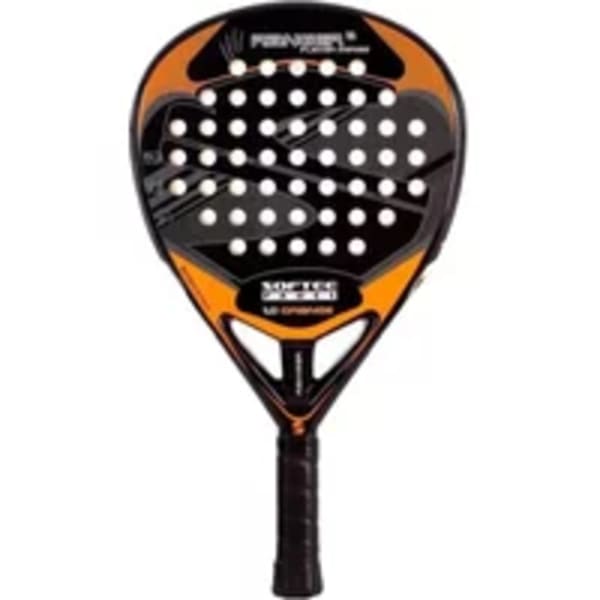
See similar rackets in stockDiamond shape, 38mm frame and 355-375g: on paper, the Softee Ranger has all the makings of an aggressive padel racket, yet it delivers them through a fibreglass face, EVA Soft core and rough 3D finish. That mismatch between shape and materials is exactly what defines how it plays on court.
A diamond racket that doesn't play like one
Diamond-shaped padel rackets typically pack mass high in the hitting zone, which usually means a demanding stick: a small, high sweet spot and instant punishment for off-centre contact. The Ranger softens that reputation in two distinct ways.
First is the medium balance. Weight isn't rammed into the head, so the 355-375g feels more neutral than the silhouette suggests. You can block at the net and redirect without feeling like the racket is dragging you forward.
Second is the EVA Soft core. Soft rubber inside a diamond shape flips the usual script: instead of demanding arm speed to activate the material, the ball sinks into the core and springs back out on its own. Rallying from the back feels effortless.
How does the Softee Ranger perform shot by shot?
On defence is where this padel racket really shows its hand. Ball exit is long and natural: a deep lob off the back wall needs no extra acceleration, just follow through on the swing plane. Low balls off the back wall pop up with height without straining the wrist.
On the bandeja, the rough 3D finish earns its keep. The surface really grips the ball through the cut, letting the shot drop with spin rather than skid flat. The vibora, helped by weight sitting slightly higher up, has enough carry to open up angles.
On the smash is where the model's ceiling shows. The ball comes off fast, but EVA Soft absorbs part of the impact: a flat smash gains pace but loses bite. Anyone looking to close out a point for 3 with one killer shot will feel the racket giving more than it's taking.
On volleys the ribbed bridge is the key piece. It stiffens the lower part of the frame and evens out weight distribution, which cuts down torsion when the ball catches you off-centre. Blocking volleys hold direction on contact that would send other rackets sailing wide.
Softee Ranger specs
| Spec | Value |
|---|---|
| Shape | Diamond |
| Weight | 355-375g |
| Balance | Medium |
| Face | Fibreglass |
| Core | EVA Soft |
| Frame | 38mm |
| Surface | 3D finish |
| Technology | Ribbed bridge |
| Level | Intermediate |
| Playstyle | All-round |
Who is the Softee Ranger built for?
The Softee Ranger is built for the intermediate all-round player: someone who already places the ball well but doesn't yet generate power from the body. The EVA Soft core and generous ball exit make up for that lack of arm speed, while the medium balance stops the diamond shape from punishing you on defence.
Within that profile, three types of player will get the most out of it:
- **Players moving up from a soft round racket** who want to try a diamond shape without losing comfort or risking elbow strain.
- **Players who log long hours on court**: the soft rubber cuts down fatigue over long matches, and the manageable weight helps in the closing stages.
- **Defensive backhand players** who live off the lob and the ball off the back wall, and need depth without forcing the shot.
As a doubles partner, it works best alongside someone who can close out points with a hard smash. If both players are on soft-core rackets, you'll be missing a putaway shot.
Fibreglass and EVA Soft: what you gain, what you give up
A one-piece fibreglass face is an elastic material: it flexes on contact and returns that energy as ball speed. That's why the Ranger produces such generous ball exit even on soft-armed shots.
The cost is precision. Fibreglass filters out some of the feedback from contact, so pinpoint shots — short volleys, pinchadas off the glass, dropshots to the post — arrive with less feel than you'd get from a stiffer face. It's not a lack of accuracy, more a numbness: the ball still goes where you send it, but you feel less of how it got there.
The 38mm frame and ribbed bridge claw back much of that deficit by stabilising the frame, and that's the real trade-off with this Softee model: plenty of help, enough control, a clear ceiling.
A range built for entry level, not competition
The Ranger family comes in several colourways — Orange, Silver, Gold, Green and Fucsia — plus a Junior version, which tells you exactly who it's aimed at: mid-level players and those just starting to take padel seriously. It's one of the best-received rackets in that segment, and it's easy to see why: it asks little in return for quite a lot.
Verdict: a racket that helps you, not one that punishes you
The Softee Ranger solves a real problem for intermediate players who want an aggressive-looking racket shape without paying the physical toll. It flies off the face, bites the ball on cuts, and handles off-centre contact better than its silhouette suggests.
What it won't give you is a crisp smash or surgical volleys. If your game already depends on closing points up top with arm speed, you'll outgrow this racket within a few months. If your game is built on keeping the ball in play, defending well and waiting for the opponent's error, it's an honest companion for a long time to come.
In the brand's lineup
Within softee's lineup, the ranger positions itself as a distinctive alternative. Its overall score of 80/100 places it among the best all-round rackets we've reviewed.
Frequently asked questions
Who is the Softee Ranger for?
The Softee Ranger fits the intermediate level. Suited to players with a technical base who want to progress without jumping to a competition racket.
How much does the Softee Ranger weigh?
The Softee Ranger weighs 355-375g according to the manufacturer's stated specs.
What's the Softee Ranger's PadelTestLab score?
The Softee Ranger scores 80/100 in our review, based on power, hardness, control, maneuverability, ball exit, sweet spot and surface roughness.
Similar alternatives
Other rackets with a similar profile and price range: