Set Coyote
✓Cross-checked with official data from Sethow we score
PADELTESTLAB SCORE
0-100 scale
81/100
Price range
Description
Who this racket is for
Pros
- ✓The sweet spot stretches almost edge to edge: shots caught low off the back wall still come out deep, which is a lifeline for intermediates who don't always find the center of the racket face. The low balance and 38mm profile mean you're never late to a blocked volley or a change of pace at the net, no wrist snap required. The XtraSoft EVA core soaks up the impact and barely any vibration reaches your forearm — a solid pick if you're managing elbow niggles and playing three or four sessions a week. The textured four-layer woven fiberglass face bites into cut shots and topspin lobs, and grips the ball off the wall better than a smooth surface would. Even caught low with no setup, the defensive lob comes out deep with minimal arm thanks to the fiberglass flex and soft rubber core.
Cons
- ✗The flat smash from position 3 falls short: with no mass up top and the fiberglass flexing on contact, the ball comes out fast but without the weight to finish the point. The XtraSoft EVA rubber loses definition with worn balls or in cold conditions; on quick reaction volleys the response lands a beat later than it would with a harder core. At the top of the range, 375g is a lot of racket for anyone chasing pure lightness — over a long match the wrist feels it on repeated bandejas. Being 100% fiberglass with no carbon anywhere, the power ceiling arrives early; a player who evolves toward finishing points from the back will outgrow it within a season.
PADELTESTLAB SCORE
0-100 scale
81/100
Its price has barely moved since March 21: between €86.79 and €89.35. Today it sits at €88.57.
Prices recorded daily since March 21 · 27 days of data
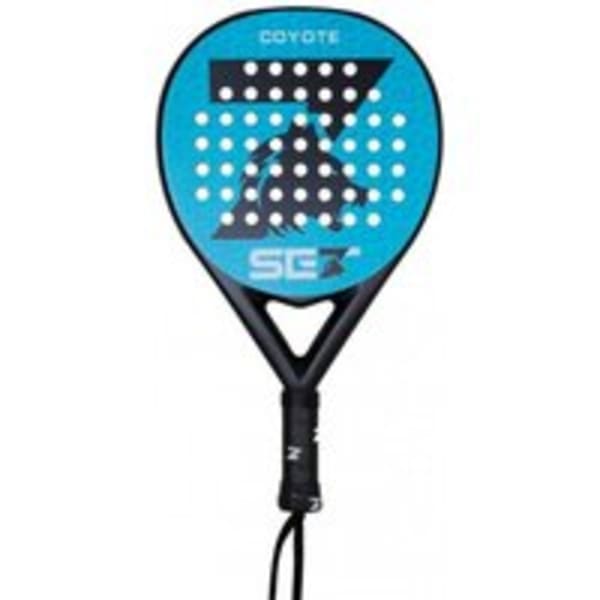
SET Coyote: round shape, 355-375g, a 100% fiberglass face and frame, a 38mm profile and an XtraSoft EVA core. Five specs that already sketch out the game plan: low balance, instant ball exit and a generous sweet spot for the intermediate player still sharpening their technique.
Who is the SET Coyote padel racket actually for?
It's built for the improving intermediate. This is a control racket — round shape, low balance — that forgives off-center hits, gets to the volley quickly, and doesn't demand the surgical timing of a diamond shape. It also suits advanced players who prioritize placement over raw power. Its ceiling is outright power.
Four layers of fiberglass: what changes versus a carbon face
The face is built from four layers of woven fiberglass, and the frame uses the same material — there's no carbon anywhere on this padel racket. That has a direct effect on what you feel in your hand.
Fiberglass flexes more than carbon weave. The ball stays on the face a fraction longer, comes out with its own added push, and the feel is soft rather than crisp. For a player who isn't yet generating serious arm speed, that flex works in their favor.
The weave pattern chases two things: grip and durability. The textured surface bites into topspin and cut shots, and the crossed weave handles the ball off the back wall better than a smooth face would.
Low balance rules the game: the SET Coyote shot by shot
At net, the weight sitting close to the handle is obvious. The blocked volley comes out clean because the racket arrives on time; you can change pace, open up short angles, and play the counter volley without regripping.
On the bandeja, the centered sweet spot and light head give you very consistent repetition: the ball lands where you aim it, even if it doesn't land heavy. It's a positioning bandeja, meant to hold the net rather than genuinely trouble your opponents.
The vibora is playable, but it forces you to hunt for angle over speed. Without mass up top, the ball leaves with spin but no threatening depth.
The smash from position 3 and the flat overhead mark this racket's ceiling. The fiberglass returns energy late for an explosive strike, and there's not enough head inertia. A kick serve to the back fence pays off far more than trying to end the point against the back wall.
On defense, the SET Coyote pulls ahead of stiffer rackets. Caught low off an awkward wall exit with no setup, the lob still comes out deep with minimal arm. Same story in long cross-court topspin rallies: it holds up without punishing your forearm.
SET Coyote technical specs
| Spec | Value |
|---|---|
| Shape | Round |
| Weight | 355-375g |
| Balance | Low |
| Face | 100% fiberglass |
| Core | XtraSoft EVA |
| Frame | 38mm, fiberglass |
| Surface | Textured |
| Recommended level | Intermediate |
| Playstyle | Control |
XtraSoft EVA and elbow comfort: why the soft core matters here
The XtraSoft EVA core sits at the soft end of the spectrum and its job is to cushion. Impact reaches your forearm filtered, which matters a lot if you're playing three or four days a week and dealing with elbow soreness.
There's a trade-off: a rubber this soft loses definition once the ball is worn or when you're playing in the cold. On short volleys where you've got a split-second to react, the response arrives a beat later than with a harder core.
Who should buy it — and who to pair it with
The profile is clear: an intermediate who builds the point, moves the ball around, lobs with intent, and wins through consistency rather than firepower.
- **Yes** if you're coming from a stiff racket and your arm has been feeling it.
- **Yes** if you miss more from off-center contact than from lack of power.
- **Yes** if you play the side that sets up the point and lets your partner finish it.
- **No** if your go-to winner is the flat smash.
- **No** if you're after a racket that'll grow with you into an advanced, power-hitting profile.
The natural pairing is a partner with a harder-hitting racket: this SET model puts the ball up high and deep, and the other closes it out.
Verdict: honest control, limited power
The SET Coyote delivers exactly what it promises: forgiveness, ball exit and comfortable impact. The lack of carbon makes it an entry point into the intermediate tier, with a ceiling that shows up sooner than some players would like.
If the goal is grinding out long rallies without paying for it in your elbow, it delivers. If the goal is ending them in one shot, this isn't your racket.
In the brand's lineup
Within set's lineup, the coyote is one of the most accessible options starting at €88.21, perfect for getting started without a heavy outlay. Its overall score of 81/100 places it among the best control rackets we've reviewed.
Frequently asked questions
Who is the Set Coyote for?
The Set Coyote fits the intermediate level. Suited to players with a technical base who want to progress without jumping to a competition racket.
How much does the Set Coyote weigh?
The Set Coyote weighs 355-375g according to the manufacturer's stated specs.
What's the Set Coyote's PadelTestLab score?
The Set Coyote scores 81/100 in our review, based on power, hardness, control, maneuverability, ball exit, sweet spot and surface roughness.
How much does the Set Coyote cost?
Current price of the Set Coyote is 88.21€, comparing 1 shop in our finder.
Similar alternatives
Other rackets with a similar profile and price range: