Royal Padel Japan Pro 2025
✓Cross-checked with official data from Royal Padelhow we score
PADELTESTLAB SCORE
0-100 scale
78/100
Price range
Description
Who this racket is for
Pros
- ✓The polyethylene core cushions the impact on a high-balance diamond racket: you get the punch of a bandeja by 3 smash without the harsh vibration that usually comes with this shape The 3D Rough Surface texture genuinely bites into the ball on a crosscourt vibora and a cut bandeja, where the sidespin translates into a low bounce after it hits the court Ball exit is among the most generous in the diamond category: you don't need a 100% clean strike to get the ball flying fast off the back wall The 38mm frame and the head-heavy weight distribution create a noticeable whip effect on the flat smash and the bandeja off the window Carbon face blended with fiberglass: the fiberglass softens the carbon's response, giving a sweet spot that's more forgiving than you'd expect from a diamond racket
Cons
- ✗The high balance punishes you on defence: arrive late to a ball off the back wall with the racket low, and the head-heavy weight leaves you shanking the shot short and off-target At 360-380 g, this racket demands trained wrist and shoulder strength; in long rallies of blocked volleys and fast exchanges, maneuverability drops off and timing errors creep in Fine touch on the block volley and the dropshot lags behind a round-shaped racket: this is a racket built to hit hard, not to place the ball Being a 100-unit limited run, finding a replacement or repurchasing the same model if it breaks is next to impossible
PADELTESTLAB SCORE
0-100 scale
78/100
It is at its lowest price since we started tracking it: €200.00, down from €249.95. We began recording on March 22.
Prices recorded daily since March 22 · 72 days of data
Royal Padel Japan Pro 2025 review: the 100-unit diamond racket that cushions like a round shape
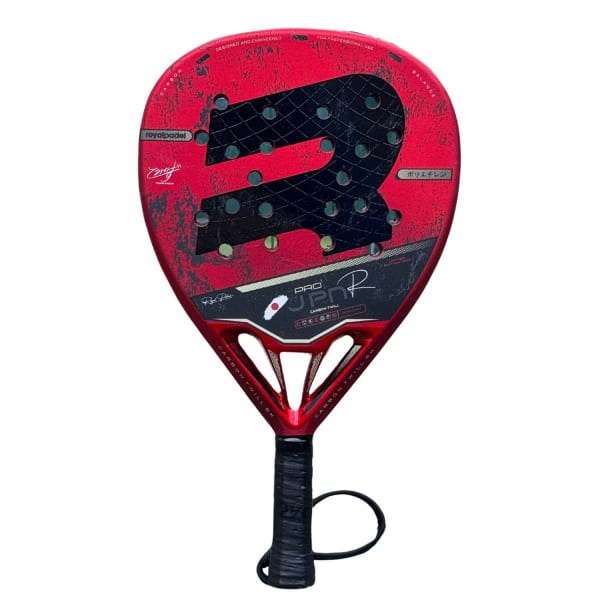
The Royal Padel Japan Pro 2025 is a limited edition of just 100 units, born from a collaboration with Japan's padel elite. It's a diamond-shaped, oversize racket with a 38mm frame, a carbon face blended with fiberglass, a polyethylene core, and a weight of 360-380 g with a high balance and a Superficie 3D Rough Surface (rough 3D-textured finish).
This isn't an off-the-shelf racket. It's a short run built for a very specific profile: the advanced player who hits from above the net and doesn't want to pay the usual harshness tax that comes with a diamond shape.
What sets the Royal Padel Japan Pro 2025 apart from other diamond-shaped rackets?
The short answer: the core. Most high-balance diamond rackets pair with hard rubber cores to maximise exit speed, and that costs them comfort and sweet spot size. Here, the soft polyethylene acts as a cushion, so the racket keeps its punch on the smash while returning a far gentler impact feel than its silhouette suggests.
That combination — aggressive shape, soft core — is Royal Padel's historic signature, and this Japanese edition pushes it to the extreme end of the power segment.
Tech specs
| Spec | Value |
|---|---|
| Shape | Diamond |
| Level | Advanced |
| Playstyle | Power |
| Weight | 360-380 g |
| Balance | High |
| Face | Carbon + fiberglass |
| Core | Polyethylene |
| Frame | 38 mm |
| Surface | Superficie 3D Rough Surface |
| Technology | Superficie 3D Rough Surface |
Carbon with fiberglass: why the face isn't pure carbon
A full carbon face on a 38mm diamond racket would give a stiff, ultra-fast response with a tiny sweet spot. Blending in fiberglass introduces a touch of flex into the hitting surface, and that's what widens the usable zone of the face.
On court, the result is clear: shots struck slightly off-centre toward the tip still come out at decent speed, which is unusual when the weight sits this high. It doesn't turn the racket forgiving — it's still a diamond — but it raises the floor for mishits.
The 38mm frame adds structural stiffness along the racket's long axis. That's what keeps the racket from flexing open on a flat smash struck at full power, sending the energy back into the ball instead of losing it to torsion.
Superficie 3D Rough Surface: the finish that shapes your vibora
The Superficie 3D Rough Surface is the second technical pillar. The sandpaper-like texture grips the ball for a few extra milliseconds, and that added contact is the raw material for spin.
Where it really shows up:
- **Crosscourt vibora**: the sidespin is noticeably stronger, sending the ball kicking wide toward the side glass instead of staying playable.
- **Cut bandeja**: the slice bites, the ball arrives flat at the back and dies against the glass instead of bouncing up comfortably.
- **Kick serve to the body**: with topspin, the trajectory jumps higher off the bounce than opponents expect.
- **Sliced dropshot**: the ball genuinely checks up after the bounce, though this racket's power-oriented character doesn't fully back it up.
Honest caveat: rough finishes wear smooth with use and on sand-based courts. The extra bite is at its peak in the first few weeks and fades from there.
How the Royal Padel Japan Pro 2025 plays, shot by shot
From above the net is where it earns its keep. The high balance and 38mm frame produce a clear whip effect on the bandeja by 3 smash and the flat smash; the ball flies off fast without needing a perfect swing, since ball exit on this model is especially generous for the diamond category. On the bandeja, the head-heavy weight does the work of following through, so you don't have to force your arm.
On volleys, it's a mixed bag. The attacking volley, backed by the weight, comes out deep with little effort. The block volley against a fast ball is harder work: the head-heavy feel forces you to prepare earlier, and fine placement control lags behind a round-shaped padel racket.
On defence is where things get tricky. Taking a ball off the back wall with the racket held low demands good body positioning; arrive late, and the 360-380 g weight combined with the high balance leaves your lob short and without height. Long baseline rallies take their toll on the forearm.
Which player is this Japanese edition really for?
For the advanced player with an established attacking game: solid smash technique, comfortable at the net, and fit enough to swing nearly 380 grams for two hours straight. Ideally a backhand-side player, or a forehand player who likes to step up and finish points.
As a pairing, it works well alongside a control-minded partner using a round-shaped racket who holds the baseline while this one closes out points from the net.
It doesn't make sense for players moving up from intermediate level, for anyone playing back-to-back matches, or for anyone nursing elbow or shoulder issues — because even with the polyethylene cushioning, the weight and balance are still there.
Verdict: power with its own signature, and one built-in limitation
The Japan Pro 2025 solves the classic diamond racket problem well: it hits hard without wrecking the feel of impact. The carbon-fiberglass and polyethylene combo delivers a fast racket with a reasonably sized sweet spot, and the Superficie 3D Rough Surface adds a layer of spin that transforms your vibora and bandeja.
What it doesn't solve: fine touch and uncomfortable defence are the structural price of a high balance, and no technology on this racket makes up for that.
And there's a non-technical factor that carries real weight: 100 units. Break it, and there's no replacing it. That exclusivity is part of the appeal — and also its biggest practical drawback.
In the brand's lineup
Within Royal Padel's lineup, the Japan Pro 2025 sits at the premium tier starting at €200. It's a serious investment, but justified if you want top-tier materials and peak performance. With an overall score of 78/100, it's a solid choice within its price range.
Frequently asked questions
Who is the Royal Padel Japan Pro 2025 for?
The Royal Padel Japan Pro 2025 targets advanced players. It needs consolidated technique and is not recommended for beginners.
How much does the Royal Padel Japan Pro 2025 weigh?
The Royal Padel Japan Pro 2025 weighs 360-380g according to the manufacturer's stated specs.
What's the Royal Padel Japan Pro 2025's PadelTestLab score?
The Royal Padel Japan Pro 2025 scores 78/100 in our review, based on power, hardness, control, maneuverability, ball exit, sweet spot and surface roughness.
How much does the Royal Padel Japan Pro 2025 cost?
Current price of the Royal Padel Japan Pro 2025 is 200€, comparing 1 shop in our finder.
Similar alternatives
Other rackets with a similar profile and price range: