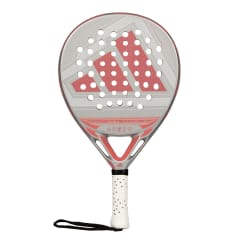
Head Vector 2025
✓Cross-checked with official data from Headhow we score
PADELTESTLAB SCORE
0-100 scale
82/100
Price range
Description
Who this racket is for
Pros
- ✓The Comfort Foam core soaks up the sting on blocked bandejas and rushed wall exits, and you feel the difference in your elbow once you're past the hour mark
Cons
- ✗Raw power is limited — on a flat smash down the line you have to supply the entire arm swing yourself, because this racket won't hand you extra pace
PADELTESTLAB SCORE
0-100 scale
82/100
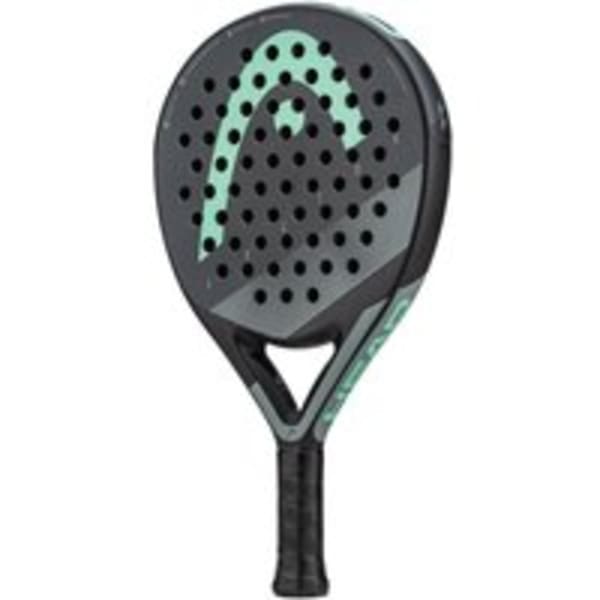
Head Vector 2025: exactly 355 grams, round shape, low balance and a fibreglass face sitting on a Comfort Foam core. Head builds the frame around Graphene 360+ and shields the perimeter with the Integrated Protector System (IPS). The intent is obvious from the first rally: control, tolerance and impact comfort come before raw pace.
What kind of padel racket is the Head Vector 2025 — and who's it for?
This is a control racket aimed at the intermediate player. Round shape, low balance and a single 355g weight. The fibreglass-and-Comfort-Foam combo prioritises easy ball exit, a huge sweet spot and vibration absorption over outright power.
Put simply: it's a racket that works for you when you're stretching to reach the ball, not one that rewards you for swinging hard.
Fibreglass over Comfort Foam: the Vector's soft-touch formula
Fibreglass flexes noticeably more than any carbon weave. On contact, the face dips a fraction and releases the ball without demanding a clean strike or perfect timing.
That's what gives this padel racket its forgiving feel. A ball taken at mid-height, off-balance and without a proper base, still comes back with direction instead of dying in the net.
The Comfort Foam core is a soft foam. Its job isn't to store energy and fire it back — it's to filter out the vibration travelling up through the grip. On forced defensive shots, like a heavy rival bandeja landing on your backhand, the difference versus a hard EVA core is instantly noticeable in the wrist.
Graphene 360+ works in the opposite direction: it spreads stiffness through the frame so the whole racket doesn't go too soft and keeps the response tight through the centre of the face.
The IPS rounds out the package on the practical side. It's built-in frame protection, and in amateur padel roughly 80% of broken rackets don't die from fatigue — they die from a mistimed glass hit on a wall exit or scraping the floor on a low dropshot.
Shot by shot: where it shines and where it falls short
Bandeja. This is its signature shot. The low balance lets you set the face up top with no effort and slice the ball with a loose wrist. The rough surface grips just enough for the cut to bite on the bounce.
Vibora. Works at half throttle. You can add slice and side-spin, but the lack of head mass caps the final speed — the vibora troubles opponents rather than finishing them off.
Smash and flat overhead. This is where you pay the price. At 355g with weight biased toward the handle, a deep kick smash or a flat smash down the line depend almost entirely on your own shoulder technique. If your game leans on closing points from above, this isn't your racket.
Wall exits. Excellent. A wide sweet spot, flexible face and manageable weight are exactly the three things you need when the ball comes tight off the side wall and all you can do is get the racket on it.
Volleys. Very comfortable blocking and sharp placement on the touch volley. The attacking volley meant to finish the point feels a touch slow.
Defence and lobs. The deep lob comes off with minimal effort because the racket swings through fast and the face doesn't spit the ball back sharply.
Head Vector 2025 spec sheet
| Spec | Value |
|---|---|
| Shape | Round |
| Weight | 355g |
| Balance | Low |
| Face | Fibreglass |
| Surface | Rough |
| Core | Comfort Foam |
| Level | Intermediate |
| Playstyle | Control |
| Technologies | Graphene 360+, Integrated Protector System (IPS) |
Which side of the court does it suit best?
It fits naturally on the backhand side, for the player who builds the point, lobs and waits for the opponent's mistake. Its quick handling lets you cover the cross-court shot and pop off the wall without ever feeling out of position.
On the forehand it demands a specific profile: a player with solid smash technique who doesn't need the racket's help to hit hard. If you're relying on the frame to add pace to your smash, the Head Vector 2025 will frustrate you.
As a pairing racket it works well alongside a partner running something with more punch: you build and sustain the point, your partner finishes it.
Three reasons to pick it, and one reason to skip it
- You're coming off a stiff racket and dealing with elbow or wrist niggles.
- You miss more from off-centre hits than from lack of power.
- You play long matches and value still feeling fresh in the third set.
The reason to skip it: if your on-court problem is failing to put away deep smashes, this soft, low-balance profile makes that weakness worse, not better.
Verdict: comfort and tolerance before raw pace
The Head Vector 2025 delivers exactly what it promises. It's an honest control racket, with a generous sweet spot, easy ball exit and a cushioned feel that's rare in the intermediate segment.
The trade-off is clear and worth accepting before you buy: contained power and limited reach on overhead shots. For the intermediate player who prioritises consistency, placement and joint health, that trade-off pays off. For the natural hitter, it won't.
In the brand's lineup
Within head's lineup, the vector is one of the most accessible options starting at €89.95, perfect for getting started without a heavy outlay. Its overall score of 82/100 places it among the best control rackets we've reviewed.
Frequently asked questions
Who is the Head Vector 2025 for?
The Head Vector 2025 fits the intermediate level. Suited to players with a technical base who want to progress without jumping to a competition racket.
How much does the Head Vector 2025 weigh?
The Head Vector 2025 weighs 355g according to the manufacturer's stated specs.
What's the Head Vector 2025's PadelTestLab score?
The Head Vector 2025 scores 82/100 in our review, based on power, hardness, control, maneuverability, ball exit, sweet spot and surface roughness.
How much does the Head Vector 2025 cost?
Current price of the Head Vector 2025 is 89.95€, comparing 1 shop in our finder.
Similar alternatives
Other rackets with a similar profile and price range: