
Babolat Technical Viper 3.0 2026
✓Cross-checked with official data from Babolathow we score
PADELTESTLAB SCORE
0-100 scale
83/100
Price range
Description
Who this racket is for
Pros
- ✓The Hard EVA core working alongside the Carbon Power Layer turns every swing into explosive ball exit, especially on smashes and viboras close to the net. The Vibrassorb System², an elastomeric material built into the frame, soaks up impact vibration on power shots, letting you string together aggressive bandejas without the arm taking the hit. The 3D Spin+ texture on the 3K carbon face makes it easier to close the racket face on lobs and cut bandejas, giving extra bite when the point comes down to how the ball bounces. The 38mm frame with Dynamic Stability System adds stiffness on finishing shots without sacking swing speed the way thicker frames in this category often do.
Cons
- ✗The high balance demands early anticipation on defence — get caught late on a fast ball at the net and shot control drops off noticeably. The tighter sweet spot that comes with a pure diamond shape punishes off-centre defensive shots more than a round or teardrop racket would. The Hard EVA core's firmness doesn't forgive mishits: off-centre contact is felt far more sharply than on rackets built with medium-density rubber.
PADELTESTLAB SCORE
0-100 scale
83/100
It is at its lowest price since we started tracking it: €262.89, down from €332.95. We began recording on March 24.
Prices recorded daily since March 24 · 117 days of data
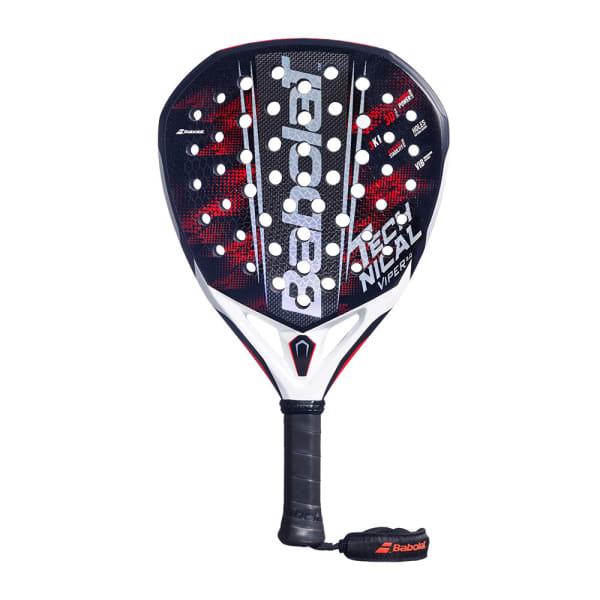
Babolat Technical Viper 3.0 2026: a full redesign built to hit hard
The Babolat Technical Viper 3.0 2026 runs a 3K carbon face over a max-density Hard EVA core. The result is a 370g racket, pure diamond shape, high balance and 38mm frame profile that prioritises finishing the point over pinpoint control.
Carbon Power Layer meets Hard EVA: the Viper 3.0's power engine
The technical heart of this racket is the Carbon Power Layer, which works alongside the Hard EVA core to squeeze out maximum output. That combination sends the ball off the face dry and fast, with almost no cushioning, which is exactly why Babolat is pitching this at players who want to dictate rhythm from the back and close out points overhead.
The 38mm frame adds the Dynamic Stability System, stiffening the whole build for extra stability through contact. It's a construction made to keep up with fast, aggressive swings without the frame flexing the way thinner mid-range profiles tend to.
Smashes and bandejas: where the high balance pays off
With weight loaded into the head, the Technical Viper 3.0 2026 picks up real inertia on overhead swings. On smashes and viboras, that balance translates into faster ball exit without having to force the arm. The 3D Spin+ texture on the face helps you close the racket on cut bandejas and defensive lobs, adding a spin margin that makes up for the flatter trajectory you lose on tighter shots.
The Vibrassorb System², an elastomer built into the carbon frame, filters out a good chunk of the vibration a core this hard generates. Over long rallies full of smashes, that dampening is the difference between finishing a match with a fresh arm or a sore one.
On defence and off the back wall: the cost of an attacking profile
The pure diamond shape concentrates the sweet spot into a smaller zone than a teardrop or round racket, so blocking volleys near the net demand more precision. In pure defence, the high balance forces you to prepare early — get to a fast ball late and the racket punishes the exit instead of bailing you out, which is typical of head-heavy builds with a core this dense.
The Holes Pattern System in the frame backs up the racket's attacking profile, but it doesn't make up for the smaller relative hitting surface that comes with a pure diamond shape compared to a teardrop or round racket on blocking shots near the net.
Babolat Technical Viper 3.0 2026: full specs
- Shape: Diamond
- Weight: 370g
- Balance: High
- Face: 3K carbon
- Core: Hard EVA
- Frame: 38mm
- Level: Advanced
- Playstyle: Power
- Texture: Rough, with 3D Spin+
Who is this racket actually for?
It performs best in the hands of players with technique already dialled in, who want to dictate rhythm from the back of the court and don't need the racket to bail them out of mishits. The arm needs to handle a firm core without any prior joint discomfort, and the game plan should lean more on finishing shots than long rallies from the baseline.
It's not the right fit for anyone who prioritises control above everything, or for players nursing elbow or wrist niggles: the combination of Hard EVA core and head-heavy balance demands a trained arm that can absorb that workload match after match.
Verdict: raw power with a control trade-off
The Babolat Technical Viper 3.0 2026 is an attacking racket built around the Carbon Power Layer and Hard EVA core, with a high balance that prioritises the smash and vibora over baseline rallies. Its biggest strength is ball exit on finishing shots; its biggest catch is the physical demand that same profile places on defence and on arms with less mileage. It's a racket to recommend to an advanced player with an established overhead game, someone after a racket that won't forgive but also won't hold back their attack.
Is the Technical Viper 3.0 2026 a competition-level racket?
It doesn't carry any pro-circuit player's signature, so despite its premium positioning it sits in the advanced tier rather than pure competition. That absence of a signature player is exactly what separates it from top-of-the-range rackets backed by a circuit top-30.
How long does the 3D Spin+ texture's extra grip last?
The 3D Spin+ relief on the 3K carbon face holds its grip as long as the surface hasn't been worn smooth by constant contact with the ball, which typically happens after several months of heavy use. On rackets with this core density, the texture can flatten out over time, though wear ultimately depends on how much you play and the type of ball you use.
In the brand's lineup
Within babolat's lineup, the technical viper 3.0 sits at the premium tier starting at €234.95. It's a serious investment, but justified if you want top-tier materials and peak performance. Its overall score of 83/100 places it among the best power rackets we've reviewed.
Frequently asked questions
Who is the Babolat Technical Viper 3.0 2026 for?
The Babolat Technical Viper 3.0 2026 targets advanced players. It needs consolidated technique and is not recommended for beginners.
How much does the Babolat Technical Viper 3.0 2026 weigh?
The Babolat Technical Viper 3.0 2026 weighs 370g according to the manufacturer's stated specs.
What's the Babolat Technical Viper 3.0 2026's PadelTestLab score?
The Babolat Technical Viper 3.0 2026 scores 83/100 in our review, based on power, hardness, control, maneuverability, ball exit, sweet spot and surface roughness.
How much does the Babolat Technical Viper 3.0 2026 cost?
Current price of the Babolat Technical Viper 3.0 2026 is 234.95€ – 313.95€, comparing 7 shops in our finder.
Similar alternatives
Other rackets with a similar profile and price range:


Player reviews
5.0 · 1 review
Reviews are written by registered users. We do not verify that reviewers have bought the racket.